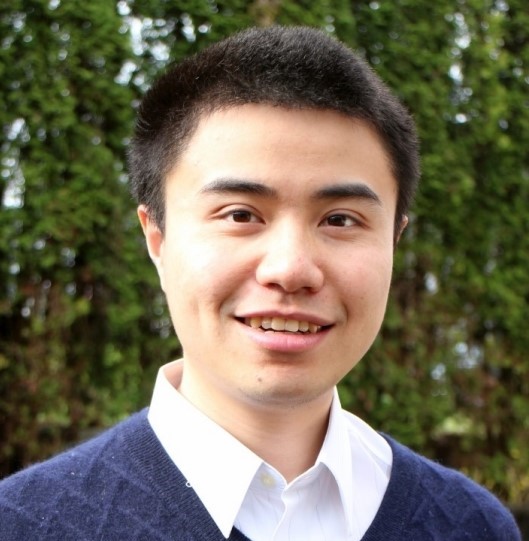
About Me
I am an Assistant Professor in Artificial Intelligence and Health Informatics at jointly appointed by the Virginia Tech-Wake Forest University School of Biomedical Engineering and Science (VT-WF SBMES) and Wake Forest University School of Medicine (WFUSoM), where I serve as the core faculty at Center for Artificial Intelligence Research (CAIR) and the Co-Leader of the Alzheimer’s Disease Research Center (ADRC) Data Management and Statistical Core (DMSC), and I am the Principal Investigator of the / Digital Medicine Analytical (DMA) Lab.
Before joining VT-WF SBMES and WFUSoM, I was a Postdocctoral fellow at Simon Fraser University (SFU) and University of British Columbia (UBC). I obtained my Ph.D. degree from University College London (UCL) Department of Medical Physics and Biomedical Engineering (MPBE), and M.Phil/B.Eng degree from The University of Hong Kong (HKU).
Research Interest
My research lies at the intersection of artificial intelligence (AI), biomedical imaging, genomics, multi-omics biomarkers, and health informatics. My research focuses on developing multimodal, clinically explainable, and trustworthy AI solutions for aging populations at risk of neurodegeneration. My work has led to clinical applications in brain diseases such as Alzheimer’s disease and related dementia, other types of neurodegeneration, as well as retinal diseases such as diabetic retinopathy, macular degeneration, and glaucoma. My research was funded by extramural research funding, including grants from the National Institutes of Health (NIA R01, P30) and the Alzheimer’s Association International Research Grant (AARG).
My research centered around the following areas: 1) explainable multi-scale multi-modal AI approach for effective integration and fusion of medical imaging (MRI/PET/OCT) and multi-omics (genomic, transcriptomic, proteomic) data to achieve precision diagnosis, risk stratification, disease prevention; 2) self-supervised and generative AI methods to disentangle disease heterogeneity for differential diagnosis of subtypes; 3) large-scale multi-site multi-modal medical imaging data harmonizing, domain adaptation, and clinical evaluation to achieve generalizable and trustworthy AI; as well as 4) Spatial temporal deep learning for monitoring disease progression and intervention/treatment response. My work has led to the development and translation of various computational biomarkers and intervention targets.
Recruiting & Opportunities
Position are openning for Postdoctoral Fellow (T32) and PhD student (F30).
- Neuroimage genomics for Alzheimer’s Disease and related Dementia using Multi-Modal Deep Learning.
I am also recruting highly motivated students to conduct research in area including:
- Multi-modal foundational model for neuroimaging and multi-modal medical data;
- Computational Neuroanatomy using Graph Convolutional Network (GCN)
- Genomic-based deep learning using Natual Language Processing (NLP) models
- Multiomic analaysis explainable neural network to cluster and predict to age-gelated biological process mechanisms.
Explainable AI methods to validate, understand and visualize machine learning models in medical applications to facilitate clinical translation.
- Please check the Students & Opportunities page for detailed job description for Postdoctoral Fellow and graduate student positions. Please send me your CV and transcript(s) if interested through Email.